
Felidragons
The felidragon (Felidra gracilis) is a cosmopolitan, medium-sized synapsid within the unique mammalian order Volaticavida. Characterized by a sleek, feline physiology integrated with functional draconic features, the species is distinct among modern fauna for retaining primitive egg-laying reproductive habits, classifying them within the infraclass Prototheria. Unlike larger reptilian interpretations of draconic creatures, F. gracilis exhibits a highly compressed, aerodynamic avian-mammalian build optimized for powered flight. The species is a highly versatile ecological generalist and a true omnivore, actively moving between secluded wilderness reserves and human suburban settlements across a global range.With a stable global population estimated at approximately 90,000 mature individuals, the felidragon is classified as Least Concern (LC) on the IUCN Red List. The species exhibits pronounced evolutionary radiation and is currently divided into five morphologically and geographically distinct subspecies: the Granite Cliff Dragon (F. g. muronidus), the Moananui Dragon (F. g. immersovela), the Paua Coast Dragon (F. g. portucustos), the Pounamu Dragon (F. g. chlorochrysus), and the Terracotta Dragon (F. g. oasivagus).Unlike reclusive wildlife, the felidragon displays an advanced cognitive capacity and a unique dual-vocal tract architecture that enables it to speak human languages—primarily English—fluently. This has allowed the species to bypass traditional territorial aggression in favor of progressive, non-territorial social networks termed "Drifts," coexisting cooperatively alongside human populations worldwide.
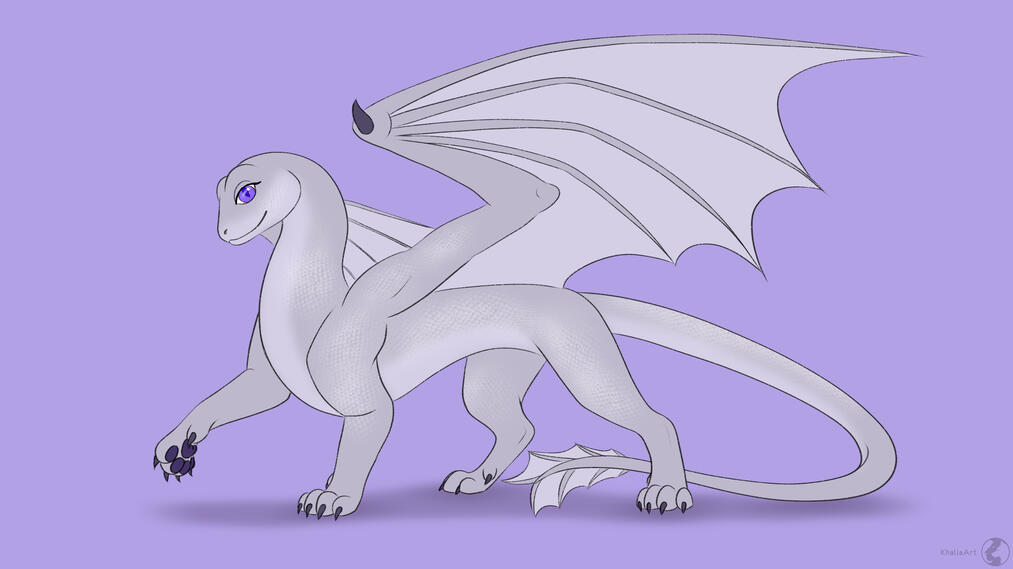
Granite Cliff Dragon (Light)
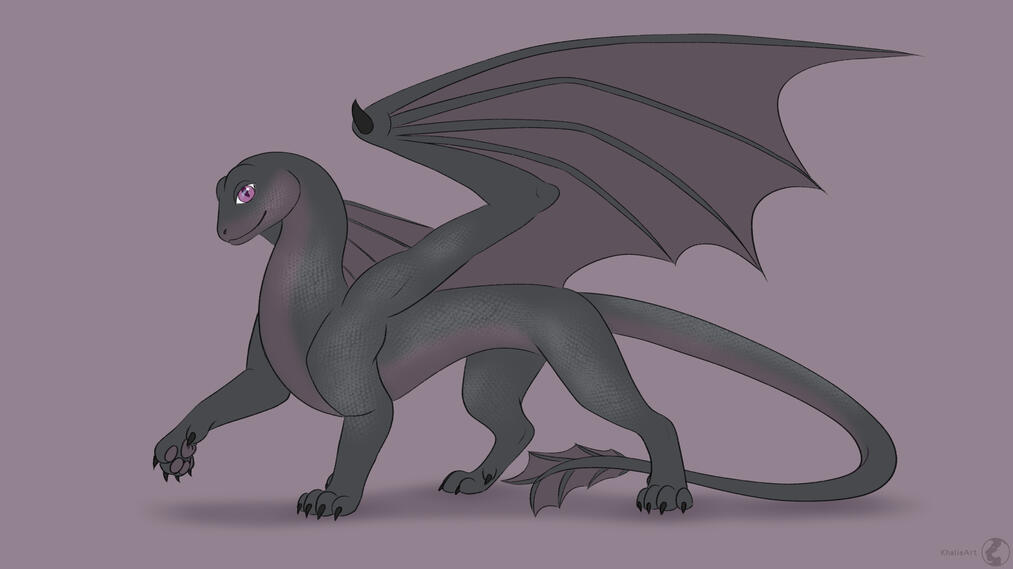
Granite Cliff Dragon (Dark)
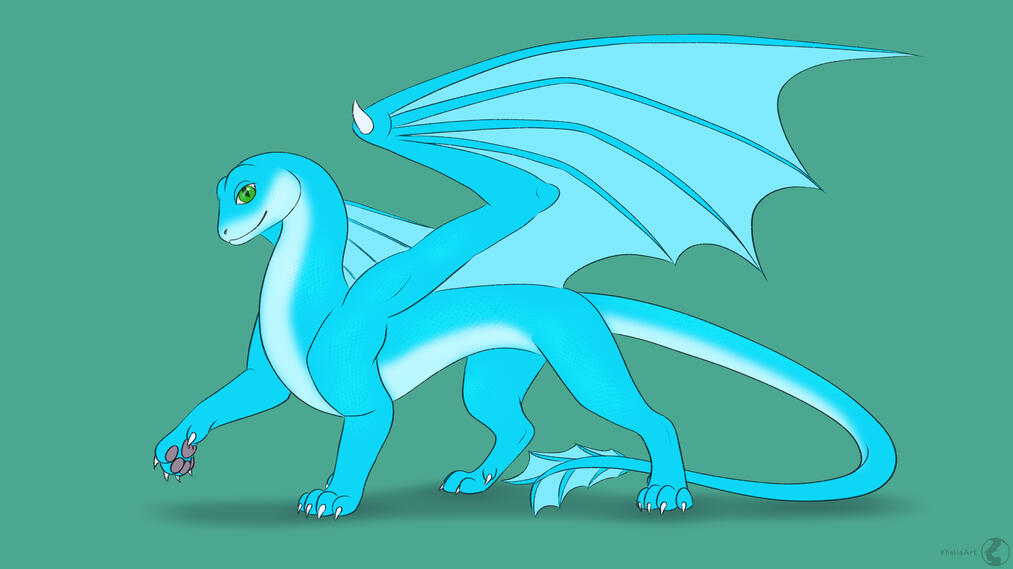
Paua Coast Dragon
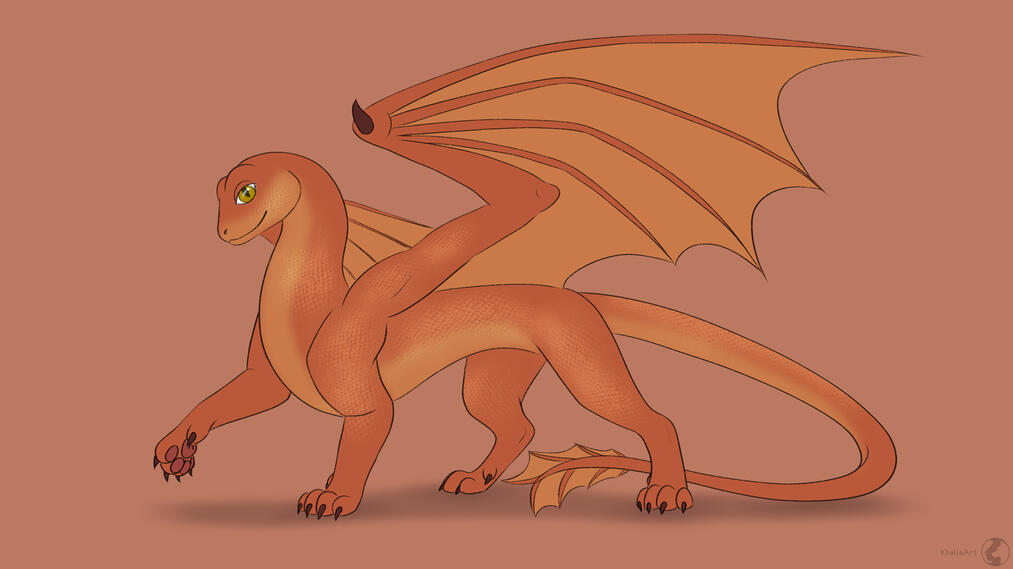
Terracotta Dragon
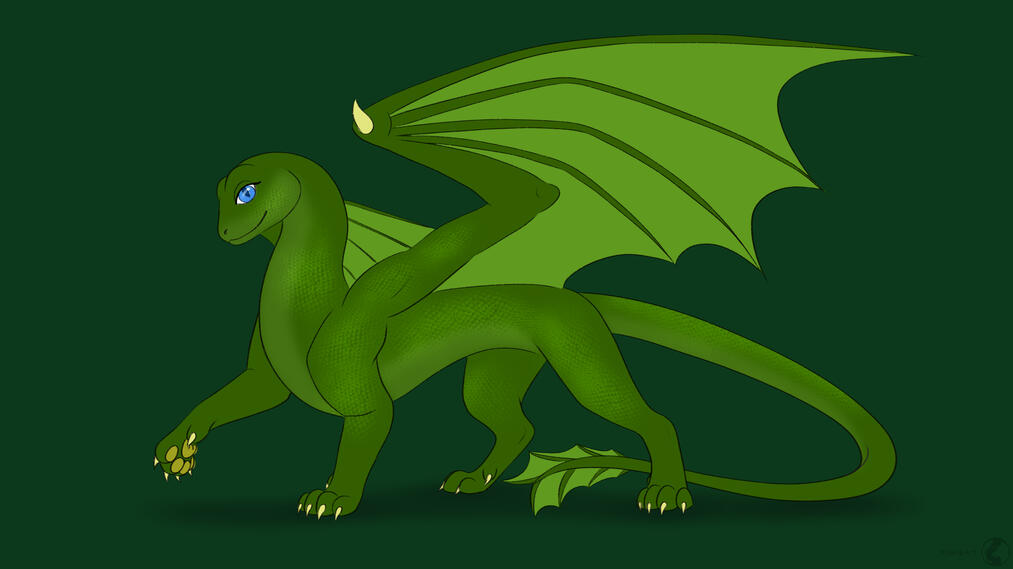
Pounamu Dragon
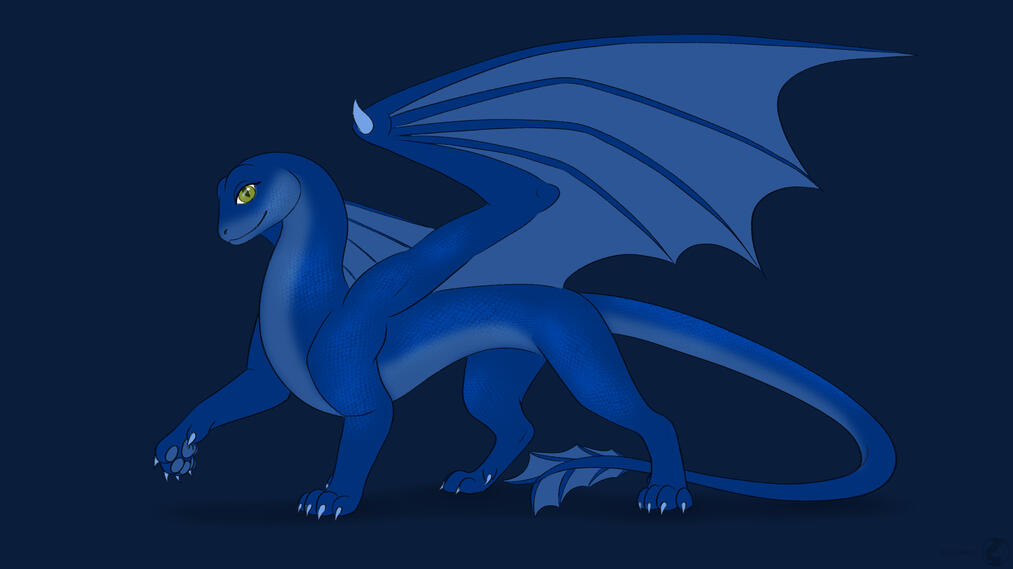
Moananui Dragon


Felidragon Base by KhaliaArt
Subspecies examples colored by MwendoTheCheetah
Species created by MwendoTheCheetah
| Felidragon | |||||||||||||||||||||
|---|---|---|---|---|---|---|---|---|---|---|---|---|---|---|---|---|---|---|---|---|---|
Conservation status | |||||||||||||||||||||
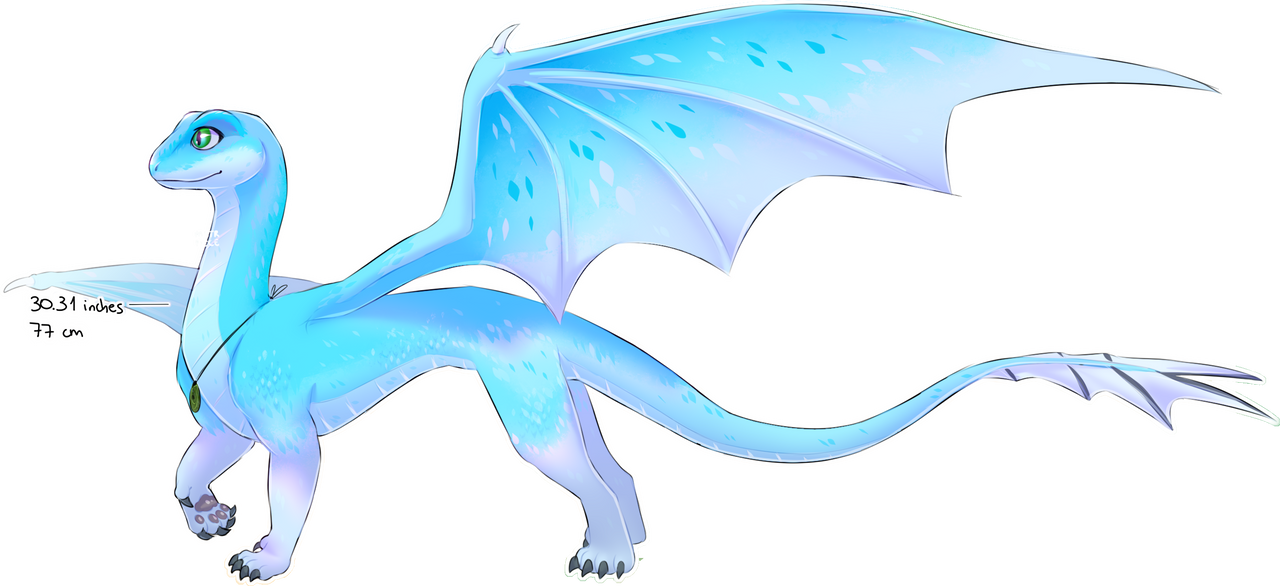 An adult Felidra gracilis portucustos displaying its wingspan and small height - Art by Mstrpiece | |||||||||||||||||||||
| Scientific classification | |||||||||||||||||||||
| |||||||||||||||||||||
| Binomial name | |||||||||||||||||||||
Felidra gracilis | |||||||||||||||||||||
| Subspecies | |||||||||||||||||||||
| |||||||||||||||||||||
Characteristics
The felidragon is a medium-sized, highly cursorial synapsid that structurally mirrors the dimensions and sleek, athletic proportions of the cheetah (Acinonyx jubatus). While remarkably small and lightweight when contrasted against traditional reptilian draconic megafauna, Felidra gracilis is a substantial mammalian omnivore. Every aspect of its anatomy is specialized for extreme aerodynamic efficiency, combining low body mass with an elongated, flexible skeletal framework.
| Average Adult Dimensions | |
|---|---|
| Shoulder Height | 70-84cm (28-33in) |
| Total Head Height Range | 92–110 cm (36–43 in) |
| Body Length (Chest to Rump) | 85–115 cm (33–45 in) |
| Weight Range | 25–48 kg (55–105 lb) |
Anatomy and Physiology
To achieve powered flight at a cheetah-like mass, the felidragon relies on extreme skeletal minimisation and an intensely powerful metabolic engine. Its thoracic girdle supports a pair of large, leathery, membranous wings that fold flush against its flanks when moving quadrupedally on the ground.The core structural blueprint of F. gracilis balances three distinct biological frameworks:
The Skeletal Framework: Features highly porous, trabecular bone density and extensive internal pneumatisation (hollow air cavities) to reduce weight without sacrificing structural strength during high-G aerial turns.
Craniodental Traits: The skull features a short, highly streamlined muzzle line entirely devoid of facial whiskers (vibrissae), ensuring a perfectly smooth aerodynamic surface that eliminates wind resistance. The dentition is primarily built for processing meat, featuring sharp, well-developed canines and piercing teeth designed for handling raw animal products and prey.
Prototherian Reproductive Benefits: As egg-laying prototherians, females carry lightweight eggs internally for a very short duration before laying them. This completely bypasses the severe weight penalties and fluid retention associated with heavy mammalian placental pregnancies, allowing females to remain fully flight-capable year-round.
Aerodynamic Streamlining and Integument
To facilitate extreme aerodynamic efficiency and eliminate parasitic drag during high-velocity flights, the underbelly of the felidragon is entirely streamlined. The lower abdomen features a completely flush, vertical genital slit which acts as an air-tight, water-tight, and dustproof seal. This biological safeguard completely insulates the internal reproductive anatomy from high-altitude wind chill, marine salt spray, and track debris.Positioned cleanly near the base of the long tail is an independent, circular cat-like anal opening. While the powerful surrounding sphincter muscles lock tightly to maintain a streamlined profile that is not far off from a total seal, the anus is not entirely sealed from the elements compared to the absolute closure of the vertical genital slit. This structural configuration provides a highly optimized aerodynamic shield across the lower abdomen while maintaining necessary natural baseline venting tolerances.Universally across the entire Felidra gracilis genus, the coat is composed of specialized scales that are exceptionally smooth to the touch, feeling exactly like supple, pliable mammalian skin rather than rigid armour. This uniform, skin-like texture features a striking, deep high-gloss satin finish that is completely non-iridescent across all age groups. While this physical texture remains identical worldwide, the visual color palettes vary distinctly by subspecies to match their traditional habitats. The Terracotta Dragon (F. g. oasivagus) is the only variant that exhibits an additional regional color shift based on geography, displaying a rich, deeply saturated iron-red and ochre palette within the Australian Outback, compared to its standard pale gold and sandstone cream appearance across other global deserts.
Sensory Organs and Acuity
The sensory apparatus of Felidra gracilis is a specialized blend of avian-altitudinal efficiency and mammalian tracking capabilities:
Vision: Felidragon vision is structurally similar to human eyesight. They possess full, identical trichromatic color vision, allowing them to perceive the exact same color spectrum as humans. For nocturnal navigation and twilight hunting, their retinas feature a slightly enhanced rod-to-cone ratio, granting them superior low-light visual acuity compared to humans.
Hearing: Their auditory range operates on par with, or slightly enhanced beyond, the standard human baseline. This high acoustic sensitivity is maintained despite the complete absence of external ear structures (pinnae), minimizing surface friction along the sides of the skull.
Smell: Their primary tracking sense is highly developed. The olfactory system is exceptionally advanced, possessing an internal nasal turbinate structure that delivers a sense of smell fully comparable to that of a canine, allowing them to track small invasive pests through thick forest canopies or undergrowth.
Flight Dynamics and Endurance
Felidra gracilis possesses a highly efficient biological flight profile that bridges the gap between avian mechanics and mammalian metabolic power. By combining a high-efficiency cardio-respiratory system with a streamlined, low-drag body framework, the species is capable of navigating diverse atmospheric conditions and executing long-range cross-oceanic migrations.
| Flight Performance Benchmarks | |
|---|---|
| Launch Profile | Quadrupedal stationary push-off |
| Cruising Velocity (Horizontal) | ~220–260 km/h (135–160 mph) |
| Maximum Dive Velocity (Vne) | ~300–340 km/h (185–210 mph) |
| Absolute Flight Ceiling | 4,875 m (16,000 ft) |
| Maximum Safe Endurance | 8 hours continuous flight |
| Absolute Physical Limit | 12 hours continuous flight |
Takeoff Mechanics
Unlike larger flying fauna or heavy gliders that require elevated launch points—such as sheer cliff faces or tall forest canopies—or an extensive terrestrial running start, the felidragon is fully capable of achieving takeoff directly from a stationary position on flat ground.This launch is accomplished via an explosive, highly coordinated quadrupedal vertical vault. The animal leverages its powerful hind limbs and muscular pectoral girdle simultaneously, pushing off the ground to generate immediate vertical clearance. Once airborne, it snaps its large, leathery wings downward to engage active, powered lift, transitioning seamlessly into horizontal flight within seconds.
Velocity, Altitudinal Limits, and Environment
Once airborne, the felidragon exhibits remarkable aerodynamic performance, utilizing its streamlined underbelly and lack of facial whiskers to minimize parasitic drag:
Cruising Velocity: In standard horizontal cross-country flight, the species maintains an average cruising speed of 220 to 260 km/h (approximately 135 to 160 mph).
Terminal Dive Velocity: When entering a steep, high-velocity dive—such as a hunting stoop or a rapid descent through mountain valleys—the species folds its wings tightly against its flanks. In this streamlined configuration, it maxes out at a terminal speed of 300 to 340 km/h (approximately 185 to 210 mph).
Maximum Flight Ceiling: The absolute atmospheric ceiling for unassisted, powered flight stands at 4,875 metres (16,000 feet) above sea level. Forcing travel above this altitudinal threshold introduces critical hypoxia risks due to thin atmospheric oxygen density and severe aerodynamic lift penalties.
Anti-Icing Constraints: The species lacks any natural external lubricants, oils, or sebaceous secretions to act as a barrier against moisture or ice accumulation. When traversing freezing, high-altitude air currents, they are vulnerable to atmospheric icing. To combat frost formation on their flight surfaces, felidragons rely entirely on physical flight maneuvers, deliberately stretching, flexing, and contracting their wing joints mid-air to mechanically break off and shed ice accumulation.
Aerodynamic Care and Self-Grooming: To preserve their smooth, high-gloss satin scale texture and maintain a low-drag profile, the species relies heavily on meticulous self-grooming. Their saliva contains highly specialized enzymatic cleaning agents that rapidly break down dirt, track grit, and marine salt spray. This oral grooming routine is exceptionally efficient, allowing the animal to maintain a pristine, aerodynamically optimal skin and wing finish entirely through self-directed care.
Aerobic Stamina and Metabolic Fatigue
The species employs a versatile dual-propulsion strategy to maximize its range. It is fully capable of switching between intense, high-energy flapping flight to generate rapid speed and long-distance passive thermal gliding, allowing individuals to ride major air currents across expansive continents and oceanic gaps.While exceptionally durable, the felidragon's metabolic engine faces rigid endurance constraints during continuous long-distance flight:
The 8-Hour Fatigue Threshold: Felidragons can comfortably maintain safe, uncompromised flight coordinates for up to 8 hours consecutively. Beyond this 8-hour threshold, the intense lactic acid accumulation in the sternal flight muscles and severe systemic dehydration initiate prominent acute physical fatigue.
The 12-Hour Absolute Limit: The absolute physical ceiling for continuous time-in-air stands at 12 hours. Forcing locomotion past the 8-hour warning threshold into the 12-hour limit induces profound metabolic collapse, severe muscle binding, and profound exhaustion. Outliers navigating extreme cross-oceanic treks that breach this limit exhibit severe disorientation and critical muscular trauma upon landing, requiring immediate targeted veterinary intervention and fluid therapy to reverse life-threatening systemic fatigue.
Early Development
Social Structure and Community Dynamics
| Social Structure Breakdown | |
|---|---|
| Primary Core Unit | Independent family unit (Parents & Skiffles) |
| Secondary Community Unit | The Drift (Regional social network) |
| Fission-Fusion Events | Playdates, public gatherings, communal mentoring & guidance |
Family Dynamics and Drifts
While felidragons are highly social, they do not function as an absolute communal collective. Instead, Felidra gracilis relies on a balanced fission-fusion social system that closely mirrors complex mammalian social development while retaining independent wildlife dynamics.The core of a young juvenile's life is anchored by significant, dedicated solitary time with their immediate parents. Skiffles reside primarily within a stable, private family unit, forming deep, intimate bonds with their parents. This domestic environment serves as their primary space for rest, individual parenting, emotional security, and learning core personal boundaries.The species uses the collective noun "drift" to refer simply to any group of felidragons, regardless of size or specific location. In many cases, independent family units within a local region form a highly integrated social network, routinely gathering as a local drift to organize structured, collaborative community events. These manifest as organized childhood playdates, festive social celebrations, and environments for communal mentoring and behavioral guidance. This allows skiffles to transition seamlessly between the quiet privacy of their immediate family unit and active, group socialization with peers of a similar age. This dual-layer upbringing ensures that while they develop strong individual identities, they simultaneously master the disciplined public etiquette and language fluency required by the wider global species.
Intra-species Etiquette and Gathering Customs
When encountering other members of their genus outside of planned community events, felidragons display a highly disciplined, non-aggressive social etiquette. Individuals maintain a respectful distance from one another in shared territories, strictly respecting personal space boundaries. Proximity or close physical interaction is initiated only after both parties have clearly exchanged visible, welcoming comfort cues.When a mutual connection is established, Felidra gracilis engages in rich, cooperative tactile behaviors. These social bonding displays include casual, mutually affectionate cuddles, body rubs, and distinct interlocked wing postures where their membranous flight sails rest draped over one another to indicate mutual safety and psychological comfort.In purely wild settings, these communal bonding rituals occur predominantly in secluded, low-disturbance natural spaces, such as high mountain ridges, remote coastal shelves, or deep forest clearings. However, because of their deep familiarity with human architecture, it is not uncommon for individuals to occasionally utilize public parks, botanical gardens, and scenic suburban reserves for these interactions, particularly when migrating through human-dominated landscapes. While less habituated dragons remain respectful but brief in their public presence, highly habituated, semi-wild individuals may actively choose to integrate their social gatherings and rest cycles directly into the daily rhythm of local human communities, lounging out in the open alongside a calm, welcoming public.
Vocalisations and Intelligence
The felidragon possesses a unique, highly advanced multi-layer vocal architecture that separates it from all other modern synapsids. Across all age groups, from young skiffles to mature adults, members of the species share an identical, highly proficient vocal toolkit. This system combines articulate human speech, acoustic feline comfort signals, and complex communal melodies:
The Full Felidragon Vocal Spectrum
| Social Structure Breakdown | Physiological Engine | Social Function |
|---|---|---|
| Fluent Human Speech (Primarily English) | Upper Glottis & Cartesian Cartilages | Direct dialogue, self-advocacy |
| Continuous Feline Purr (Loud/Quiet) | Lower Larynx & Ossified Hyoid Bone | Individual comfort, domestic trust |
| Melodic Chirping Harmonies | Resonant Vocal Tract Coordination | Group coordination, collective bonding |
Human-Language Proficiency: Every individual, developing at a human-like chronological rate, achieves flawless language fluency early in life. The upper glottis—a complex framework of mobile cartilages and a dexterous tongue—allows them to speak human languages with a crisp, entirely natural human-like voice. English serves as the primary global baseline across all drifts, enabling instant communication and direct dialogue with human communities.
Linguistic Self-Advocacy: Because of this high cognitive intelligence and language fluency, felidragons do not instinctively mask physical illness or injury like traditional wild fauna. Both adults and juveniles practice active self-advocacy, using their human speech to explicitly describe localized muscle tightness, mild pain, or internal discomfort to companions, caretakers, or veterinarians. This articulate self-awareness allows for highly precise, preventative treatments and establishes clear physical boundaries during social and domestic interactions.
The Feline Purr Spectrum: Positioned deep in the throat column, the lower engine is anchored by a fully ossified, rigid hyoid bone that acts as a mechanical resonance amplifier. This enables both adults and skiffles to produce a true, continuous feline purr that rumbles unbroken on both the inhale and exhale to communicate safety and psychological comfort. The species utilizes a strict volume strategy: a loud, resonant purr is reserved for intense physical relief—such as firm tissue stimulation applied directly between the roots of the flight wings—while an everyday quiet purr acts as a whisper-soft chest flutter signaling casual domestic trust.
Melodic Chirping Harmonies: A definitive communal feature shared across the species is the production of melodic chirping harmonies. Unlike their individual human speech or purring, these clean, rhythmic, high-frequency chirps are a deeply collaborative acoustic behavior. When gathered together in groups, both mature dragons and young skiffles coordinate these notes into intricate, flowing musical harmonies that echo through forest glades, mountain valleys, or public parks.
Acoustic Lifecycle Shift: While the raw physiological capability to perform these harmonies is identical across all age groups, the frequency of use shifts over an individual’s lifecycle. Skiffles utilize these choruses frequently throughout daily play to communicate group safety to nearby monitoring parents. Conversely, mature adults communicate predominantly through direct human language and individual vocalizations for their daily routines and problem-solving. For adult felidragons, these extended melodic choruses serve as a specialized, situational social tool—deployed primarily during formal group reunions, large community gatherings, or moments of profound collective bonding within a local drift.
Growth and Maturation
Chronological vs Motor Skill Matrix
| Chronological Age | Human Equivalent Stage | Flight Capability |
|---|---|---|
| 0–2 Years old | Infant / Young Toddler | Strictly Terrestrial |
| 3 Years old | Advanced Toddler | Full Powered Flight |
| 4–15 Years old | Child / Adolescent | Localized Travel Only |
| 16–19 Years old | Sexual Maturity | Full Global Capacity |
Precocial Wings: Hatchlings emerge from their soft, leathery shells with anatomically complete wings. Unlike birds or bats, a newborn skiffle features a fully formed wing structure and functional flight membrane immediately from birth.
The Flying Toddler: Young skiffles lack initial muscle mass, achieving true unassisted powered flight at approximately 3 years of age. Because their lifecycle matches humans, a three-year-old flight-capable dragon is still cognitively and emotionally a toddler.
Decoupled Maturity: This creates a unique development phase where skiffles explore the local skies with advanced motor mechanics while still requiring the deep emotional security, playtime, and parental guidance typical of early childhood.
Nursery Play: During community drift gatherings and playdates, skiffles engage in gentle, toned-down playfights featuring fully sheathed claws and inhibited bites to safely build muscle tone. They utilize tight group huddles for physical thermal regulation and mutual psychological safety.
Ontogenetic Range Expansion: Flight range expands slowly alongside their human-synchronized growth curve. Toddlers and adolescents are biologically restricted to low-altitude, localized hometown flights within their immediate natal territory.
Adult Horizon Threshold: The stamina and caloric efficiency required for long-distance, continuous travel or individual 12-hour flights do not mature until late adolescence. Full global range unlocks only when individuals hit sexual maturity between 16 and 19 years of age.
Reproductive Biology
Reproductive Anatomy and Physiology
| Reproductive Structure Matrix | ||
|---|---|---|
| External Anatomy | Streamlined, self-lubricating slit seam | Shared universally by both sexes |
| Shared Clitoral Apex | Glistening pink clitoris | Present in both males and females |
| Intromittent Organ (Male) | Hydrostat penis (Dolphin-shaped) | Emerges via physical stimulation of the clitoris or intense arousal |
The Shared Abdominal Slit: Universally across both sexes, the reproductive organs are entirely enclosed within a flush, vertical abdominal slit. This protective seam is self-lubricating, relaxing and parting effortlessly upon psychological or situational arousal without requiring direct physical contact.
Aerodynamic Protection: When closed, the tight muscular seal completely insulates the internal anatomy of both males and females from external elements, high-altitude wind chill, and terrestrial track debris.
The Clitoral Apex: Upon the effortless parting of the self-lubricating seam, a glistening, vibrant feline-pink clitoris is revealed at the top apex cleft of the vertical slit. This highly sensitive neurological structure is present in both males and females.
Internal Male Architecture: The male's penis is housed internally behind the clitoral apex within an identical lubricated abdominal slit pocket. It behaves structurally as a muscular hydrostat—a hyper-flexible, posable, dolphin-shaped organ.
Dual-Trigger Extension Mechanics: Unlike traditional mammals that rely on rigid structural mechanisms, the penis remains retracted within the male's slit and does not emerge under standard arousal alone. Extension requires a specific neuromuscular trigger: the phallus only extends straight forward out of the lubricated pocket once the male's own clitoris receives direct physical stimulation, or if intense arousal is achieved psychologically. This dual physical and cognitive pathway results in a slow, unhurried, and highly controlled vascular reflex.
Self-Stimulating Feedback Loop: As the phallus extends and moves out of the lubricated seam, it makes direct, continuous physical contact with the male's own clitoris. This intentional anatomical friction between their two most sensitive organs provides immediate, self-perpetuating stimulation, heavily prolonging and intensifying the tactile sensations felt by the male throughout the encounter.
Gentle Intromission Control: Because this internal feedback loop provides the male with a continuous, self-perpetuating stream of physical stimulation, the mechanical process does not rely on intense friction or aggressive thrusting. This allows the male to remain incredibly gentle and slow throughout intimacy, achieving complete physical satisfaction and reproductive success entirely through soft, unhurried movements.
Vascular Retraction Mechanics: Due to the prolonged neurological sensations sustained by the internal self-stimulating feedback loop, the post-coital vascular deflation operates on a mirrored timeline. The muscular hydrostat phallus retracts back into the protective abdominal slit pocket just as slowly, gently, and unhurriedly as it initially extended, allowing the protective muscular seam to seal shut only after a gradual transition phase.
Breeding Strategies and Demographics
| Reproductive Strategy Overview | |
|---|---|
| Baseline Relationship Model | Progressive social networks; non-territorial alliance bonds |
| Parenting Alliances | Strict mutual local co-parenting agreement required for skiffles |
| Consensual Intimacy | Permissive social bonding; managed via clear partner consent |
| Output per Reproductive Cycle | Strict single-egg ceiling |
Social Intimacy and Alliance Bonding: The genus Felidra maintains a progressive, non-territorial social framework where intimacy operates primarily as a mechanism for social bonding, alliance-building, and mutual comfort. Physical bonding is practiced year-round to reinforce long-term social networks across a drift, rather than being restricted strictly to reproductive windows.
Relationship Ethics and Partner Consent: While intimacy is widely used as a flexible social tool, it is governed by strict, highly communicative social boundaries. Planned and wanted pregnancies strictly occur only between partners who are explicitly willing to stay local and share the multi-year responsibilities of raising their skiffles together. Consequently, when intimacy is pursued purely for social bonding or mutual comfort, it is carried out either with that same primary co-parenting partner, or with that partner's explicit, prior consent. This foundational level of trust and agreement ensures complete family stability within the wider drift.
Genetic Admixture: Because all global clades belong strictly to the single species Felidra gracilis, breeding between different subspecies variants occurs naturally, fluidly, and frequently. Since these variations overlap across the same global ranges based on habitat preferences rather than geographical isolation, their offspring inherit a healthy, fully fluid mix of traits with zero reproductive barriers, allowing for seamless global genetic exchange.
The Single-Egg Strategy: To preserve their high-performance flight physics, females are biologically limited to producing exactly one egg per reproductive cycle. Carrying multiple eggs would induce severe weight penalties, excessive fluid retention, and dangerous calcium depletion, completely grounding the female. This strict single-egg ceiling ensures that pregnant individuals remain light, agile, and fully flight-capable right up until the egg is laid.
Reproductive Sovereignty: Because embryonic cell division does not initiate internally, a freshly laid egg remains a completely inert capsule of proteins and fats with zero active cellular development. If the parents do not feel ready or prepared to raise offspring, this delayed development allows them to terminate the cycle by destroying or consuming the egg to avoid unwanted offspring. Because no active life has yet initiated, the parents share absolutely no guilt or emotional trauma in doing so, viewing the action as a practical and highly responsible method of maintaining complete reproductive sovereignty.
Delayed Embryonic Development
| Embryonic Initiation Timeline | |
|---|---|
| Development Start Threshold | Strictly post-laying (External) |
| Pre-Incubation Dormancy Window | ~2 days (48 hours) |
| Total Active Gestation | 20 weeks (140 days) |
Post-Laying Cellular Initiation: As highly advanced egg-laying prototherian mammals, Felidra gracilis possesses a profound reproductive adaptation where embryonic cell division does not initiate internally. The development of the embryo remains completely paused and dormant until after the soft, leathery egg has been deposited into the external environment.
The Dormancy Window: Once laid by the female anywhere within her preferred home range, the egg undergoes a brief two-day (48-hour) dormancy period before active embryonic development begins outside the mother's body.
Active Incubation Runway: From the moment cell division kicks off, the total active incubation period lasts precisely 20 weeks (140 days). Throughout this multi-month timeframe, the single egg requires consistent parental sheltering before producing a fully formed hatchling.
Resource Recapture and Reproductive Sovereignty
| Metabolic Nutrient Contingency | |
|---|---|
| Cellular Development Status | Zero active cellular division |
| Resource Profile | Pure capsule of pristine fats and proteins |
Nutritional Recycling: Because the freshly laid egg experiences delayed embryonic development, it remains a completely uninitiated capsule of pristine proteins and healthy fats.
Environmental Safeguards: If the parents decide they are not socially, mentally, or environmentally prepared to commit to a 20-week incubation cycle and subsequent multi-year rearing phase, they can choose to destroy and consume the egg to avoid unwanted offspring.
Absence of Ethical Guilt: Because no active life has yet initiated within the dormant egg, the parents share absolutely no guilt or emotional trauma in doing so. Within their social structure, this action is viewed as a practical, waste-free recapture of metabolic resources, guaranteeing total reproductive sovereignty for the individual.
(Top)
Characteristics
Flight Dynamics and Endurance
Social Behavior and Diet
Early Development
Reproductive Biology
Discord
Social Behavior and Diet
Locomotion and Foraging
Felidra gracilis utilizes a highly flexible dual-locomotion strategy that integrates an active aerial presence with efficient terrestrial movement. The species is highly proficient in the air; during periods of favorable weather, individuals routinely spend approximately one-quarter of their active hours airborne. Flight is a core component of their daily routine, utilized for local travel, territory scouting, and casual soaring. Because the species is a highly adaptable generalist capable of sourcing food year-round in their local environments, long-distance migrations are rare. When migratory movements do occur, they are never a result of seasonal changes and are strictly executed as a purely individual behavior, rather than a coordinated movement of an entire local Drift. Furthermore, these individual migrations are almost always temporary; the traveling individual eventually returns to their home Drift whenever they feel ready to do so. These journeys stem from localized resource opportunities, environmental curiosity, or personal travel choices.
Aerial Activity: While capable of scaling up to their absolute maximum ceiling of 4,875 metres (16,000 feet) if pressed by extreme topography or weather, felidragons rarely utilize this maximum altitude, routinely choosing to fly much lower to the ground. This low-altitude cruising strategy keeps them well within optimal oxygen zones and allows them to easily monitor local resource distributions, track land coordinates, and navigate efficiently between different local biomes or neighboring human settlements.
Terrestrial Foraging: Terrestrial locomotion is predominantly quadrupedal, utilizing their long, athletic limbs for efficient trekking and exploration. Thanks to a robust, highly versatile omnivorous digestive tract, felidragons actively gather and consume a vast spectrum of nutrients on the ground. Their natural baseline diet consists of wild fruits, native berries, and a wide array of local flora and raw animal resources.
Urban Integration: The species is deeply familiar with human settlements of varying sizes, ranging from small rural townships to large urban centers, treating human architecture and suburban landscapes as natural extensions of its daily foraging territory. Because of their cognitive flexibility, felidragons navigate human communities with complete ease. While foraging in these human-associated environments, they easily process dense, high-calorie resources like prepared human foods, cooked meats, or fast-food items. These high-energy supplements provide an efficient metabolic boost to fuel their high-performance flight muscles during daily flight cycles.
Ecological Impact and Local Adaptation
Because of their highly adaptable omnivorous diet, felidragons universally adapt their hunting and foraging habits to target the most abundant and ecologically disruptive food sources available within their chosen home ranges. The species functions as a critical apex ecological regulator across both remote wilderness zones and heavily populated human territories, frequently serving as an essential community protector by actively hunting invasive small mammals. To secure prey while minimizing energy expenditure, Felidra gracilis operates strictly as an ambush predator, relying on patience and specialized camouflage to execute sudden, explosive strikes.The species exhibits deep behavioral plasticity based on subspecies coloration and topography, deploying distinct environmental ambush strategies across the globe:
Aerial Ambush (Paua Coast Dragon): The Paua Coast Dragon (F. g. portucustos) utilizes a turquoise-to-light-blue coat coloration that can vary slightly in shade by individual. Because this bright palette would compromise them inside dense foliage, they operate primarily as highly efficient airborne ambush predators. Utilizing low-altitude soaring and passive gliding, they blend seamlessly against the backdrop of the open sky. Once an invasive pest is sighted in open clearings, coastal margins, or suburban lawns—such as the common brushtail possum (Trichosurus vulpecula) and the stoat (Mustela erminea) across the Bay of Plenty regional case study—they execute a rapid, vertical diving stoop to capture the target from above.
Open-Ocean Aerial Ambush (Moananui Dragon): While the Moananui Dragon (F. g. immersovela) engages in terrestrial foraging and interacts comfortably with coastal urban environments, its primary hunting grounds are situated over deeper ocean waters away from the immediate coastline. Utilizing a darker, less-saturated ocean-blue coat palette that provides countershading camouflage against the open water, this subspecies deploys a specialized aerial ambush strategy. They soar over pelagic zones to track large fish schooling directly at the water's surface, plunging downward from the air to capture their marine prey before it can scatter into the depths.
Terrestrial Ambush (Pounamu and Granite Cliff Dragons): Conversely, the dense native bush, thick forest reserves, and untamed river valleys of the world are heavily utilized by the leaf-green Pounamu Dragon (F. g. chlorochrysus)—whose green palette similarly exhibits slight individual shade variations—and the slate-gray Granite Cliff Dragon (F. g. muronidus). These variants rely on their respective green and stone-mimicking coat palettes to blend directly into the forest canopy, foliage, or sheer rock faces, patiently awaiting pests from hidden ground-level blinds or low branches.
Dual-Strategy Ambush (Terracotta Dragon): Due to the stark geographical differences among the hyper-arid biomes they inhabit, the Terracotta Dragon (F. g. oasivagus) is uniquely adapted to utilize both aerial and terrestrial ambush strategies. Across vast, flat desert expanses and open salt plains, they employ the aerial ambush method, soaring low against the glaring sun before striking downward. Conversely, when navigating areas of steep elevation, deep desert canyons, or sandstone-covered terrain, they switch to a terrestrial ambush profile. In these landscapes, they use their pale gold, sandstone, or rich iron-red coat variations to melt completely into the rock structures and sand dunes, launching explosive ground-level strikes from cover.
Subspecies Harmony and Borders: This collective predatory drive is carried directly into human-dominated landscapes. Felidragons comfortably patrol farmlands, lifestyle blocks, and suburban neighborhoods—using either aerial tracking or terrestrial garden foliage as ambush blinds—to keep invasive pest populations under strict control. This targeted ecological service makes them highly valued community neighbors, allowing them to balance their wild hunting instincts with a completely safe, cooperative, and welcomed presence alongside local human populations.
Home Range and Non-Territoriality
While individual felidragons establish distinct geographic home ranges—heavily shaped by the ecological preferences of their respective subspecies—the species does not maintain or defend defined territories. There is a complete absence of aggressive boundary-exclusion behaviors, scent-marking, or vocal intimidation displays aimed at keeping other members of the genus out of a specific zone.
Their daily behavior actively enforces this non-territorial framework:
Overlapping Ranges: Home ranges across all five subspecies overlap extensively, allowing multiple individuals and different regional morphs to utilize the exact same forest valleys, coastal shorelines, or desert plains simultaneously.
Resource Sharing and Cooperation: Because their omnivorous diet is highly versatile and adaptable, individuals do not view neighboring felidragons as direct threats to their survival. If two individuals cross paths while foraging for native berries or executing ambush strikes on local pests, they rely on their highly disciplined intra-species etiquette, utilizing passive avoidance or proactive spacing cues to share the landscape peacefully. Furthermore, these encounters often spark spontaneous cooperation; if they come across one another while out in the field, individuals will sometimes actively aid each other in foraging or coordinating ambush hunts to maximize their success.
Cooperative Coexistence: Rather than triggering defensive aggression, encounters within overlapping home ranges frequently transition into cooperative tactile bonding behaviors—such as mutual body rubs and interlocked wing postures—whenever they cross paths.